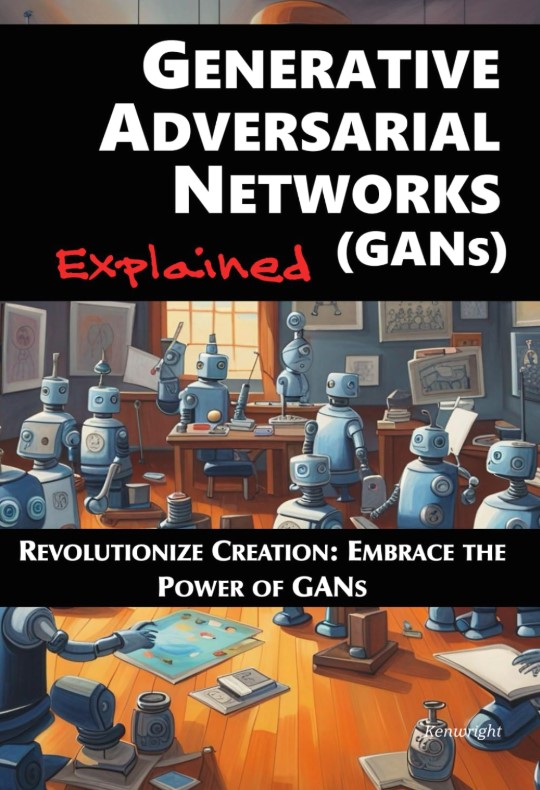
A groundbreaking exploration of visualization and its impact on the digital landscape. This essential read offers fresh perspectives and practical insights that will transform your understanding.
Readers will appreciate the author's ability to weave storytelling with scholarly insight, creating a rich tapestry of knowledge that is both informative and engaging. The carefully structured chapters build upon each other, creating a learning journey that is both educational and inspiring. Each section includes practical examples and thought-provoking exercises. The book's title, "Generative Adversarial Networks (GANs) Explained", reflects its central theme: a bold exploration of ideas that challenge conventional thinking and encourage intellectual growth.
It’s rare to find a book that speaks to both the heart and the mind. This one does.
This book challenges conventional thinking and offers a refreshing new framework.
That section was brilliant. I've already applied those techniques with great success.
December 27, 2025Couldn't agree more. The real-world examples made all the difference for me.
January 3, 2026The author's expertise shines through in every chapter. The insights on ai are particularly valuable.
Couldn't agree more. The real-world examples made all the difference for me.
January 6, 2026Totally agree. The pacing and structure made it easy to stay engaged throughout.
December 31, 2025Stay updated with the latest from the book world
Elon Musk promised that his social media company X would be “the everything app,” but these days “everything” seems to only include slop, fasc...
Read MoreAt a recent meeting, French president Emmanuel Macron and Mexican President Claudia Sheinbaum conducted a highly symbolic book swap. To commemorate ye...
Read MoreEvery year, the Periplus collective awards mentorships to writers of color living and working in the United States, pairing each one with a member of ...
Read MoreEnhance your reading and learning experience
Use the Feynman Technique: teach what you learn to someone else to identify knowledge gaps.
Take brief notes after each chapter. Summarizing helps cement knowledge.
Rubber Duck Debugging: explain your code line by line to an inanimate object.
Write documentation as if the next person reading it is a violent psychopath who knows where you live.
Use a pointer or your finger to guide your eyes. This can increase reading speed by 25%.
Follow the 20-20-20 rule: every 20 minutes, look at something 20 feet away for 20 seconds.
Sarah Johnson
Professional ReviewerCouldn't agree more. The real-world examples made all the difference for me.
January 5, 2026